
On government's last week's announcement of revamping of PSU banks, Fitch Ratings said the move is "credit positive, but risks remain".

Punjab National Bank is the second largest PSU bank, in which government holding is 58.87 per cent.

According to the Scheme of Amalgamation, shareholders of Vijaya Bank will get 402 equity shares of BoB for every 1,000 shares held. In the case of Dena Bank, its shareholders will get 110 shares for every 1,000 shares of BoB.

India's equity markets are on a roller-coaster ride, after delivering spectacular returns for two consecutive years - in 2020 and 2021. The benchmark National Stock Exchange's (NSE's) Nifty50 is down 1.5 per cent in the first nine months of the current calendar year 2022 (CY22) as foreign portfolio investors sold Indian stocks due to rising bond yields in the US and across global markets, including India. The sell-off in the Indian equity markets has, however, not been broad-based and largely limited to sectors facing earnings headwinds from rising interest rates, lower commodity and energy prices, and likely economic recession in advanced economies.

The RBI on Friday imposed a fine of Rs 6.5 crore (Rs 65 million) on six public sector banks including IDBI Bank, Dena Bank and Indian Bank, for violation of customer identification or KYC norms and anti-money laundering guidelines.

Apart from streamlining loan processing, most public sector banks charge lower interest rate, an aspect which seems to be game changer.

The Central Bureau of Investigation has started a preliminary enquiry looking into the Rs 950 crore (Rs 9.5 billion) alleged bad loan given by IDBI Bank to Kingfisher Airlines ignoring the company's negative credit ratings and net worth.

After a gap of about five years, a public sector bank (PSB) has decided to rope in a cricketer to boost its brand.
The need to allow government shareholding in public sector banks to come down below 51 per cent

A lot depends on how Srei shapes up under the new administrator and his team, which is critical for investors' interest.
A section of analysts feel now may not be a bad time to buy select PSBs.

The committee's suggestion that existing commercial banks be allowed to hold payment banks as subsidiaries is also seen as unviable by RBI and the finance ministry.

'We should look at is full year's growth rather than quarter numbers.'

The CBI has initiated the action on the complaint of Bank of Baroda, which was a member of consortium led by Bank of India, which had approached the agency fearing that Kothari may flee the country like Nirav Modi and his uncle Mehul Choksi.
Lack of decisiveness and courage to deal with PSBs may turn out be the biggest impediment to the Modi government's economic initiatives, says Debashis Basu.
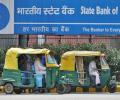
India's state banks are under pressure to improve profitability.

The mass cancellation of coal blocks by the Supreme Court has sent banks in a jittery mode as they have extended over Rs 1 lakh crore loans to power plants that were fed by these mines.

Sensex catapults 1,241 points and Nifty vaults 382 points in two sessions in a row.

The CBI has shared its findings with the Enforcement Directorate.

Start-ups Zomato, PB Fintech, One97 Communications, and FSN E-Commerce Ventures have entered the large-cap category after the latest reclassification exercise by the Association of Mutual funds in India (Amfi). This comes despite stocks such as PB Fintech (Policybazaar) and One 97 Communication (Paytm) trading below their issue price. Others such as Mindtree, SRF, IRCTC, Tata Power, JSW Energy have been moved from mid-cap to large-cap category.

The wholesale price-based inflation eased for the eighth consecutive month to 4.73 per cent in January on easing prices of manufactured items, fuel and power. The wholesale price-index (WPI) based inflation rate was 4.95 per cent in December 2022 and 13.68 per cent in January 2022. Inflation in food articles, however, rose to 2.38 per cent in January, from (-) 1.25 per cent in December, 2022.

In a proposal to FinMin, the Banks Board Bureau suggests asset sales to PSUs within a deadline to recover bad loans.
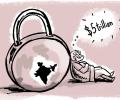
It would be a difficult task for the Indian economy to reach the $5-trillion mark a year before the International Monetary Fund (IMF) projection of 2026-27. Pankaj Chaudhary, minister of state for finance, said in the Rajya Sabha on Tuesday that the government is taking steps to make the country a $5-trillion economy at a date earlier than the IMF's projection. In that context, it would not be difficult to meet the projection in the third quarter of FY27.

Public sector lender Bank of India has moved to the National Company Law Tribunal (NCLT) seeking initiation of insolvency proceedings against Future Retail Ltd and a moratorium over the assets of the Kishore Biyani-led debt-ridden firm. Besides, Bank of India (BOI), the lead banker of a consortium of banks that lent money to Future Retail Ltd (FRL), also suggested the insolvency tribunal appoint Vijay Kumar V Iyer as the interim professional of the company. Meanwhile FRL, in a regulatory filing, said it has been served and received a copy of the petition and is in the "process of taking legal advice".

Banking and financial stocks got more than their fair share of foreign portfolio investor (FPI) flows in February. Overseas investors pumped in $3.56 billion into domestic equities last month. Of this $1.96 billion went into financial stocks, data analysed by Edelweiss shows. "The sector now has 34.8 per cent of FPI assets, up from 33.8 per cent in January.

India's industrial production contracted by 4 per cent in October, the sharpest fall in 26 months, mainly due to decline in output of manufacturing and subdued performance of mining and power generation sectors, according to official data released on Monday. The Index of Industrial Production (IIP) had grown 4.2 per cent in October 2021. The previous low was (-) 7.1 per cent in August 2020.

Ex-India captain Sourav Ganguly and Baroda's Krunal Pandya were among a host of cricketers who have come to aid of former India player Jacob Martin, who is in a critical condition in a Baroda hospital

Country's biggest mortgage lender HDFC on Tuesday announced a festive offer in line with peers like SBI with home loans starting from 6.70 per cent. Last week, SBI as part of festival bonanza offered a concessional home loan rate of 6.70 per cent under its festive offer. This was followed by other lenders like Punjab National Bank and Bank of Baroda.

The five-judge constitution bench headed by Chief Justice DY Chandrachud, which heard their contentions at length, told them they will have to justify the procedure adopted for abrogation as the court cannot postulate a situation "where the ends justify the means".

The Union government could target a fiscal deficit of 5.8-6 per cent of nominal GDP for 2023-24, and it should continue its capital expenditure push and look to simplify the personal income tax regime, economists recommended Finance Minister Nirmala Sitharaman and her team during their pre-Budget interaction on Monday. Starting last week, Sitharaman had eight pre-Budget consultations this time. More than 110 invitees representing seven stakeholder groups participated in these meetings, the finance ministry said in a statement. The stakeholder groups included representatives and experts from agriculture and agro-processing industry; industry, infrastructure & climate change; financial sector and capital markets; services and trade; social sector; trade unions and labour organisations; and economists.

Ajit Mishra, vice president, research, Religare Broking, answers your stockmarket queries.

Only three of India's 45 commercial banks have cut base lending rates since the Reserve Bank of India's surprise easing this month, hurting the government's drive to lift business investment.

Vijay Mallya on Wednesday gave a proposal to the Supreme Court to repay around Rs 4,000 crore (Rs 40 billion) loan to banks by September this year.

Piramal Enterprises' bid for debt-ridden DHFL received the most votes from lenders at the close of the voting process on Friday, sources said. Piramal Enterprises' bid received 94 per cent votes as compared to 45 per cent for the US-based Oaktree Capital. Voting was done on various parameters, including qualitative and quantitative.

Banks have taken this aggressive posture even as liquidity has become comfortable on the back of increased government spending.

As a percentage contributor to nominal GDP, PFCE's share was 60.1 per cent in FY23, compared with 59.6 per cent and 60.8 per cent in the two preceding fiscal years. "Although PFCE is expected to grow 7.7 per cent in FY23, we believe it is still short of a broad-based recovery. "The current consumption demand is highly skewed in favour of goods and services consumed largely by the households falling in the upper income bracket. "A broad-based consumption recovery, therefore, is still some distance away," said Sunil Kumar Sinha, principal economist with India Ratings.
.jpg)
With new private banks in the play, the going could become more difficult for the old-school state-run banks, already losing business and market position, forcing them to think hard towards consolidating and forming larger entities to garner big-ticket deals.

Markets end in green with auto, banks on a steady climb.

The 30-share Sensex ended higher by 177.46 points at 28,885.21 and the Nifty gained 63.90 points at 8,778.30.

Loans for Indian airlines have dried up as banks have become cautious to lend to the sector.
